Source Tracking Maynard

This study was sparked by the consistently high E. coli bacteria levels we found from 2019 to 2022 in the Assabet River at the Route 27 bridge in Maynard. E. coli, originating from the digestive systems of warm-blooded animals, signals fecal contamination in the water. The Sudbury, Assabet, and Concord rivers all aim to meet a Class B water quality standard, ensuring they are safe for fishing and swimming. At OARS, we’re committed to making this goal a reality by identifying and eliminating sources of bacterial contamination. Over the past five years, we’ve closely monitored E. coli levels in the Assabet River, particularly at the Route 27 bridge, and have consistently found that these levels are higher than what’s considered safe. Determined to get to the bottom of this, we launched an intensive study in 2023. Our goal? To uncover the hidden sources of this bacterial pollution and work towards a cleaner, safer river for everyone.
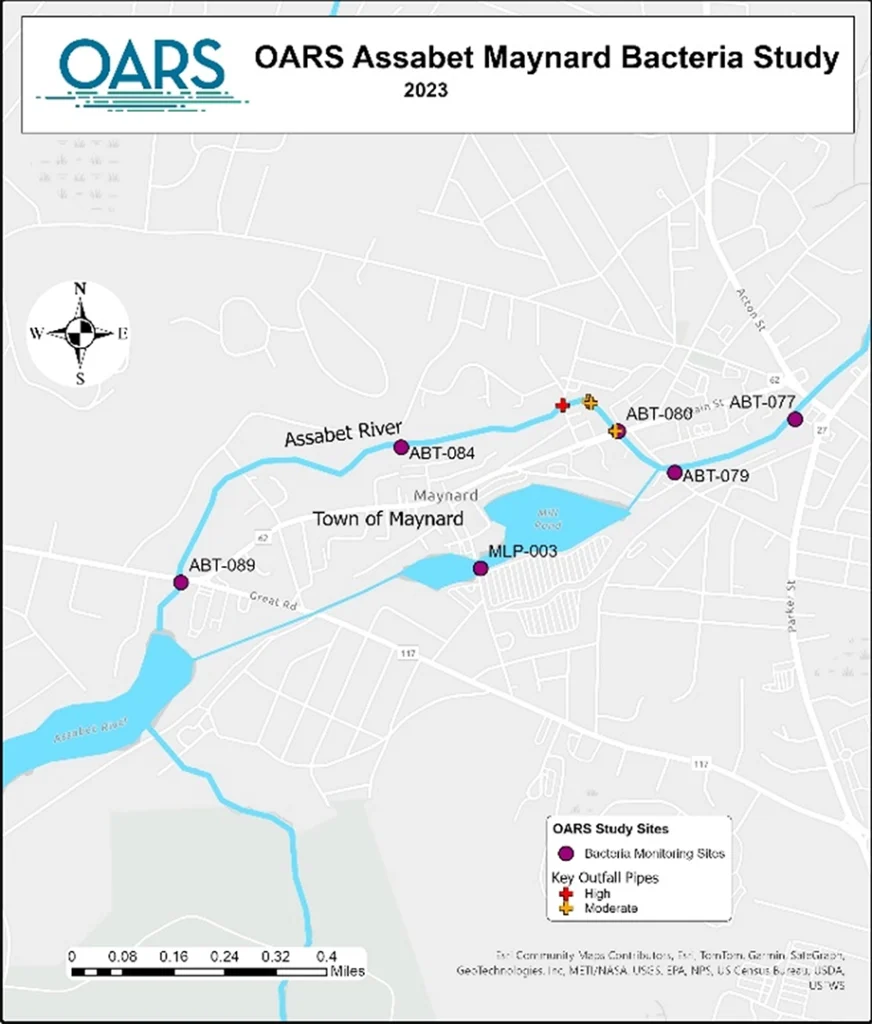
Our dedicated OARS volunteers collected samples from five locations upstream of the Route 27 bridge, aiming to uncover the source of the bacterial pollution.
E. Coli

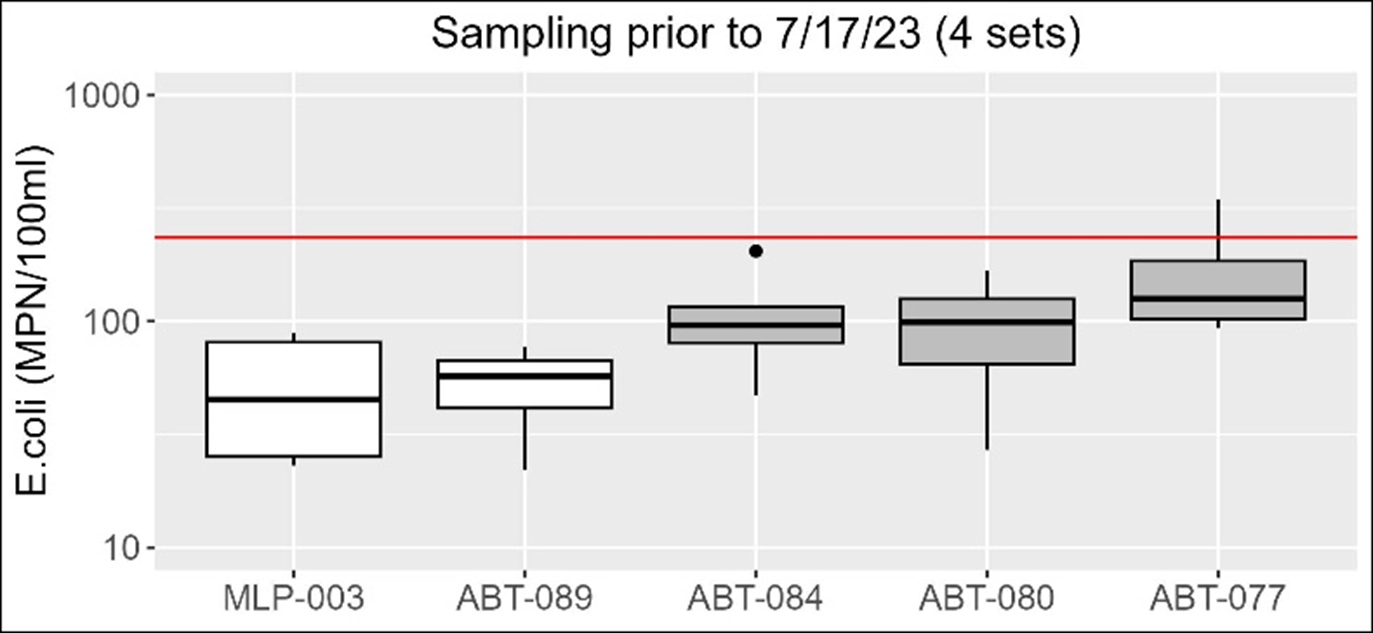 During the early season’s dry weather, we noticed a significant spike in bacteria levels between the Route 117 bridge (ABT-089) and the Maynard Town Hall (ABT-084). While the exact source of the pollution in this area is not obvious, these findings are a crucial step in narrowing down our search.
DNA Analysis
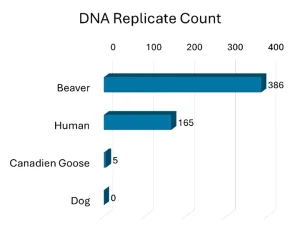 A DNA sample was taken at the Route 27 bridge to help solve the mystery of the Assabet River’s bacterial pollution. This sample, gathered during a period of wet weather with high bacteria counts, was tested for traces of four species: human, beaver, goose, and dog. The results were eye-opening! While human contamination was significant, beavers turned out to be the likely main culprits during rainy weather. Looking ahead, we plan to conduct another DNA analysis in 2024 under dry-weather conditions to get an even clearer picture.
Detergent Survey
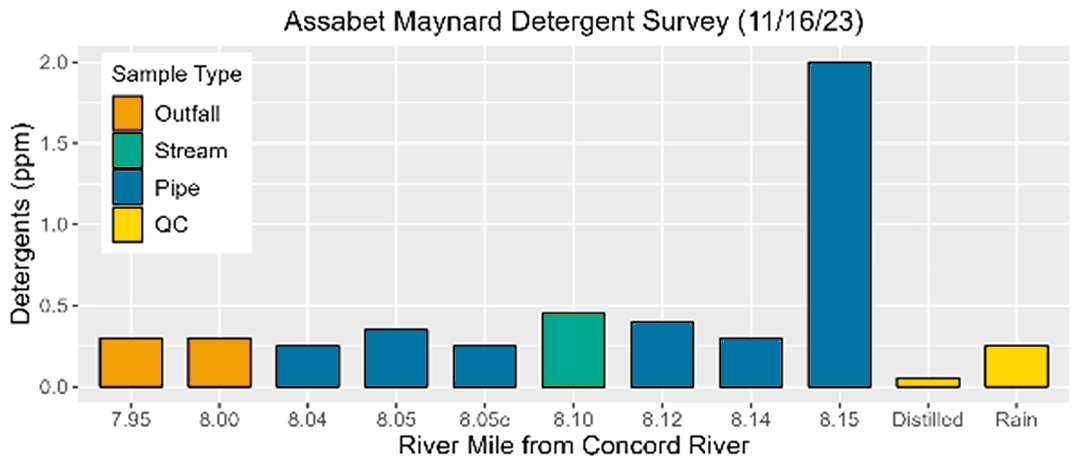 We also surveyed detergent levels in the outfall pipes that flow into the river. Why detergent? It’s a simple and cost-effective way to trace water sources from buildings using soaps and detergents. Thanks to this survey, we pinpointed three inflows with elevated detergent levels, with one pipe showing particularly high levels. These pipes might also be contributing to the bacterial pollution. We’ve shared the locations of these problematic pipes with the Maynard Department of Public Works.
OARS is working with the Town of Maynard to eliminate this bacteria pollution. Our goal is to make the Assabet River safe for human contact through swimming, wading and exploring. The Assabet River is currently considered safe for boating and fishing-but not for eating the fish!

This work was made possible through funding from the Greater Lowell Community Foundation.