Main Street Dam Removal
Project Overview
Location: Main Street, Hudson, MA (Danforth Brook, a tributary to the Assabet River)
Lead Organization: OARS, in collaboration with the dam owner, GZA Environmental, state agencies, and the Town of Hudson
Purpose: Improve public safety, restore natural hydrology, enhance cold water fishery habitat, honor the site’s historical significance, and support a healthier future for Danforth Brook
Why Look at Dam Removal?
Main Street Dam is an example of a structure that made sense in the past but presents challenges today. In simple terms, it’s an old dam that comes with modern-day responsibilities, risks, and costs. This project will reconnect fragmented aquatic habitats, enhance biodiversity, and provide long-term climate resilience.
If removal moves forward, the project would:
-
Restore a more natural stream channel
-
Improve flow and reduce flooding risks over time
-
Stabilize the surrounding area
-
Include environmental review and permitting
-
Be done in a controlled and carefully managed way
Reimaging Danforth Brook



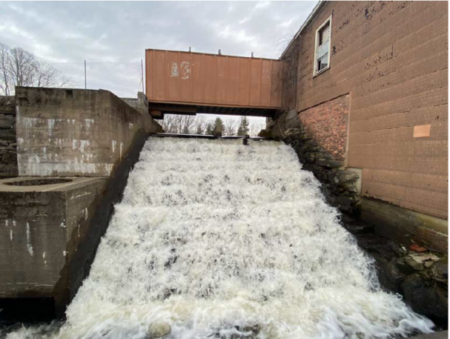
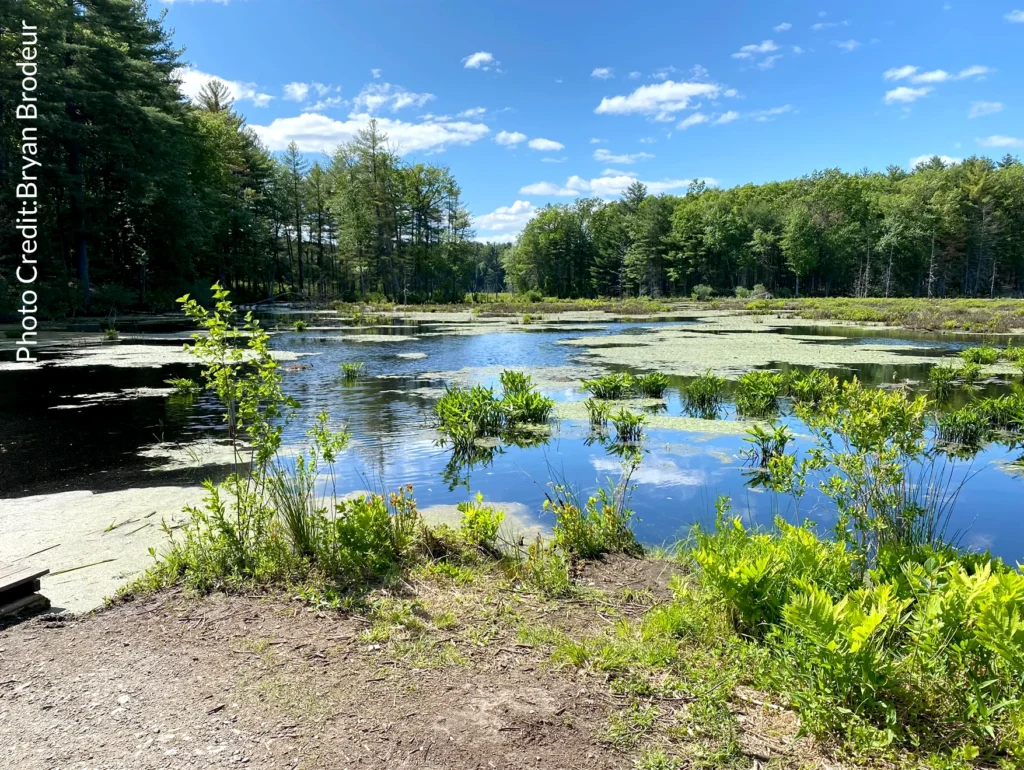
Main Street Dam is located in downtown Hudson, Massachusetts on Danforth Brook, a tributary to the Assabet River. The dam was originally built to support historic industrial uses, reflecting a time when local waterways powered mills and early industry. Today, the dam no longer serves its original purpose and is an aging structure with ongoing safety, maintenance, and regulatory challenges. Located in a developed area, it also raises concerns about long-term risk during large storm events. OARS, in partnership with the dam owner, engineers, the Town of Hudson, and state agencies, is working to evaluate the best path forward for the site. This includes exploring whether dam removal could provide a safer, more sustainable solution for the community while restoring more natural stream flow and improving the health of Danforth Brook.
Key Concerns & Objectives
Public Safety
The dam is located in a developed area of Hudson. Engineering studies have shown that under large storm events, the dam can be overtopped, which raises safety concerns in a downtown setting.
Aging Infrastructure
Like many older dams, this structure requires regular inspection, maintenance, and potential repairs. These needs can be costly and ongoing for the owner.
A Healthier Stream
Removing the dam would allow Danforth Brook to flow more naturally again. This can improve habitat, reconnect the stream, and support better water quality over time.
A Long-Term Solution
For some dams, removal can be a more practical and lasting solution than continued repair. It can reduce long-term risk and provide clearer outcomes for both the owner and the community.
Scope of Work
This effort includes several steps before any final decisions are made:
-
Engineering studies and site evaluation
-
Public outreach and informational meetings
-
Coordination with town, state, and federal agencies
-
Evaluation of alternatives, including repair and removal
-
Environmental review and permitting
-
Potential dam removal and stream restoration
Restoring Ecological Connectivity: Cold Water Fisheries and Resident Fish
Several species of fish depend on the cool, connected waters characteristic of coldwater fisheries. When dams are removed and stream habitats are reconnected, these species can better access the habitat they need to survive and thrive.
Danforth Brook is designated as a Coldwater Fishery Resource (CFR) based on the historic presence of wild brown trout, with records from upstream of the Main Street Dam near the Lincoln Street/Bradford Road area. While recent surveys have not documented brown trout, their past presence indicates that upstream reaches of the brook have supported coldwater habitat conditions.
Fish surveys conducted upstream of the dam have identified a diverse community, including American eel, fallfish, white sucker, tessellated darter, redfin pickerel, bluegill, pumpkinseed, brown bullhead, yellow bullhead, and banded sunfish. Several of these species, particularly fallfish, white sucker, and American eel are more commonly associated with cooler, well-oxygenated stream habitats, while others are tolerant of warmer, slower-moving conditions. This mix reflects a system that has both coolwater and warmwater characteristics.
The Main Street Dam currently limits movement between upstream and downstream habitats. Removing the dam would reconnect these areas, allowing species like American eel to access more of the brook and complete their life cycle. It would also restore more natural stream flow, improve water quality, and reduce warming caused by the impoundment. These changes can enhance habitat for existing species and, over time, improve conditions for coldwater fish like brown trout, while strengthening the overall health and resilience of Danforth Brook.
For more information about freshwater fish species in Massachusetts, visit: https://www.mass.gov/info-details/freshwater-fishes-of-massachusetts
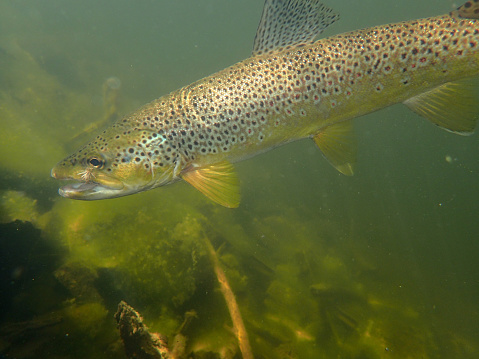
Brown Trout
Ideal habitats for Brown trout (Salmo trutta) are cool, well-oxygenated freshwater systems. This indicator species requires clean and unpolluted water, signaling a healthy aquatic ecosystem when present. They thrive in flowing rivers and streams.
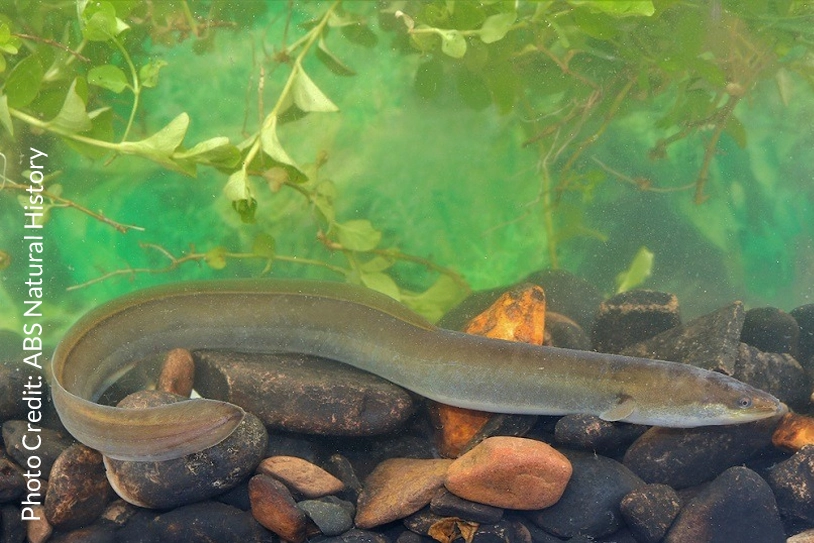
american eel
Species of Greatest Conservation Need in Massachusetts
With a steady decline in population, conserving existing American eel (Anguilla rostrata) populations is important and may be particularly impactful when combined with habitat restoration actions such as dam removal, culvert improvements, and improved water quality infrastructure.
fallfish
Species of Greatest Conservation Need in Massachusetts
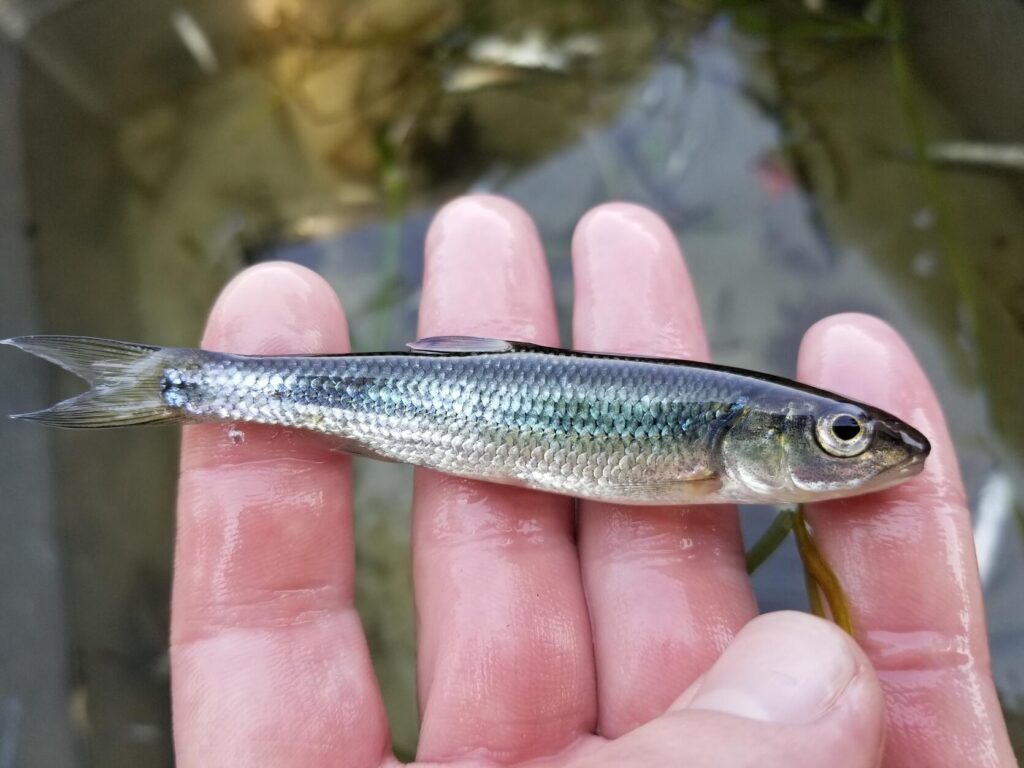
This large minnow (Semotilus corporalis) is found in cool water rivers and streams with rock and gravel substrates. During the spawning season, this species moves upstream into tributaries containing moderate flow and clear water. Dams and sedimentation reduce aquatic connectivity and cover rock and gravel spawning habitats, impacting movement to spawning grounds and the quality of habitat for fallfish and other species.
White sucker
Species of Greatest Conservation Need in Massachusetts
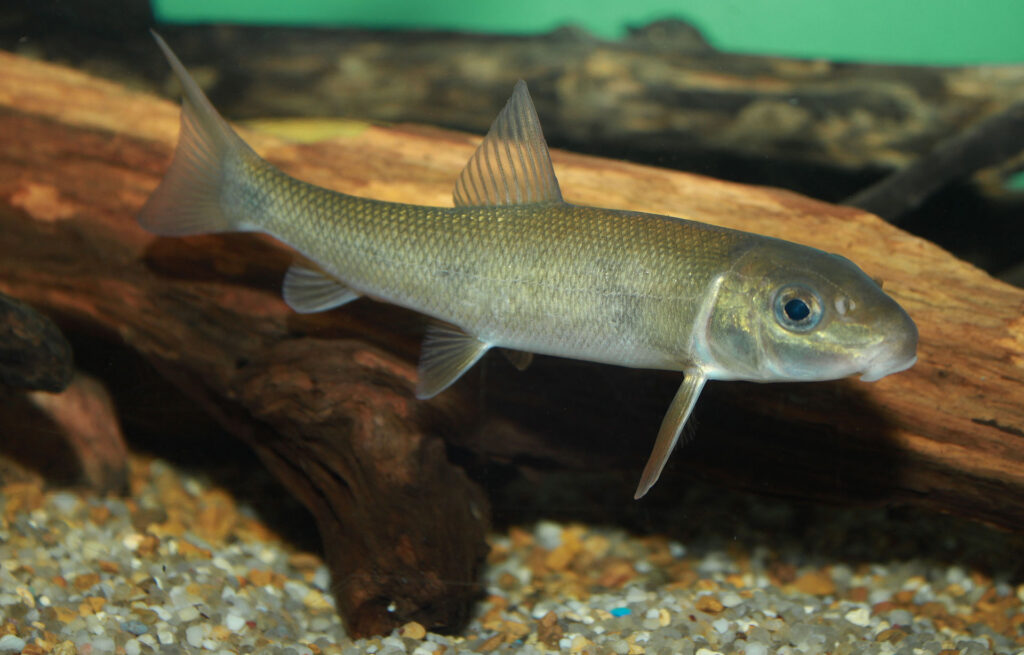
The White sucker (Catostomus commersonii) migrates into tributaries during spring, creating important energy transfer to aquatic and terrestrial organisms. Threats include dams, stream flow alteration and sedimentation that reduce aquatic connectivity, reduce rearing habitat in summer and cover gravel and rock spawning habitats.


Expected Benefits of Dam Removal
If dam removal is pursued, the project could provide long-term benefits for the community and the environment:
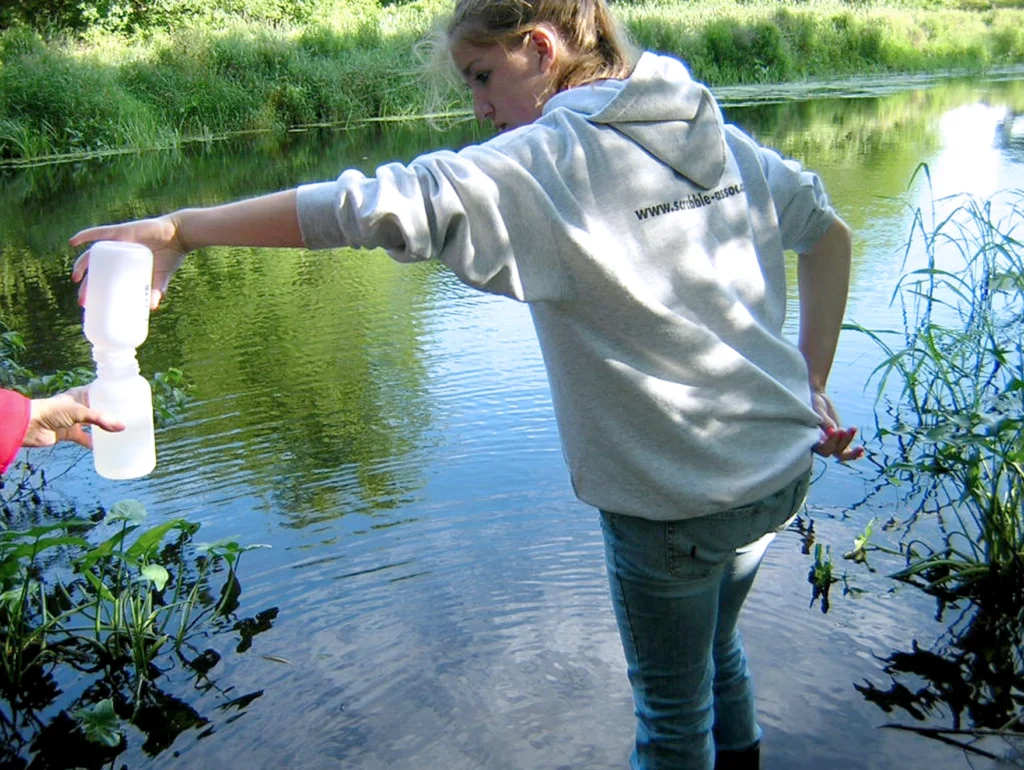
Community & Safety
-
Reduced long-term safety concerns
-
Lower risk associated with aging infrastructure
-
A clearer path forward for the property owner
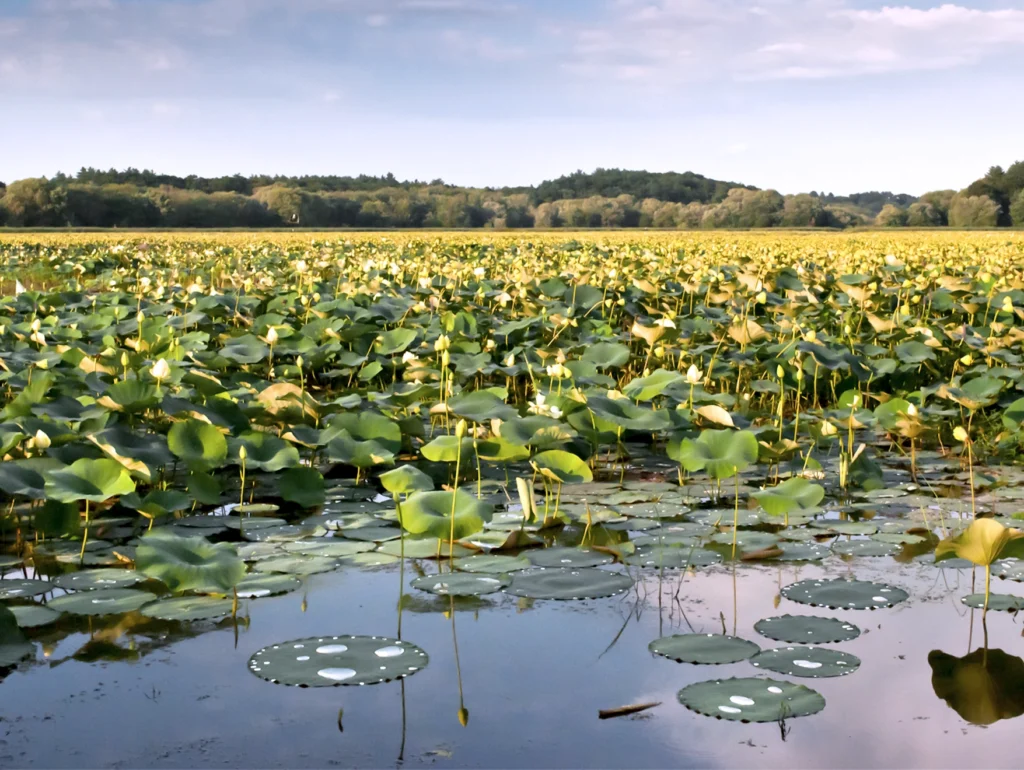
Environmental improvements
-
A more natural Danforth Brook
-
Improved stream connectivity and habitat
-
Better long-term water quality
Climate Resilience
-
Improved ability for the system to handle large storm events
-
Reduced pressure on aging infrastructure
History of the Main Street Dam & Larkin Lumber Site
The Main Street Dam on Danforth Brook is part of Hudson’s long industrial history, when waterways powered local mills and businesses that shaped the town’s economy and identity. Like many New England communities, Hudson developed around its rivers and streams, using water power to support manufacturing and trade.
One of the most prominent businesses associated with this site was Larkin Lumber, a family-owned company that operated for over a century and became a well-known fixture in the community.
Founded in 1882 by Edgar P. Larkin, Larkin Lumber grew alongside Hudson’s industrial base, supplying lumber and millwork products to the region. The Main Street Dam helped maintain water levels that supported historic industrial uses along Danforth Brook, contributing to the working landscape that sustained businesses like Larkin Lumber.
Over time, however, the role of dams like this one changed. As industry declined and technologies evolved, the dam’s original purpose faded, while the structure itself remained—aging and requiring ongoing maintenance.
Larkin Lumber ultimately closed in 2013, marking the end of one of Hudson’s longest-running family businesses and signaling a broader transition away from the town’s industrial past.
Today, the Main Street Dam stands as a reminder of that history, while also presenting modern-day challenges related to safety, aging infrastructure, and environmental impacts.
Timeline & Progress
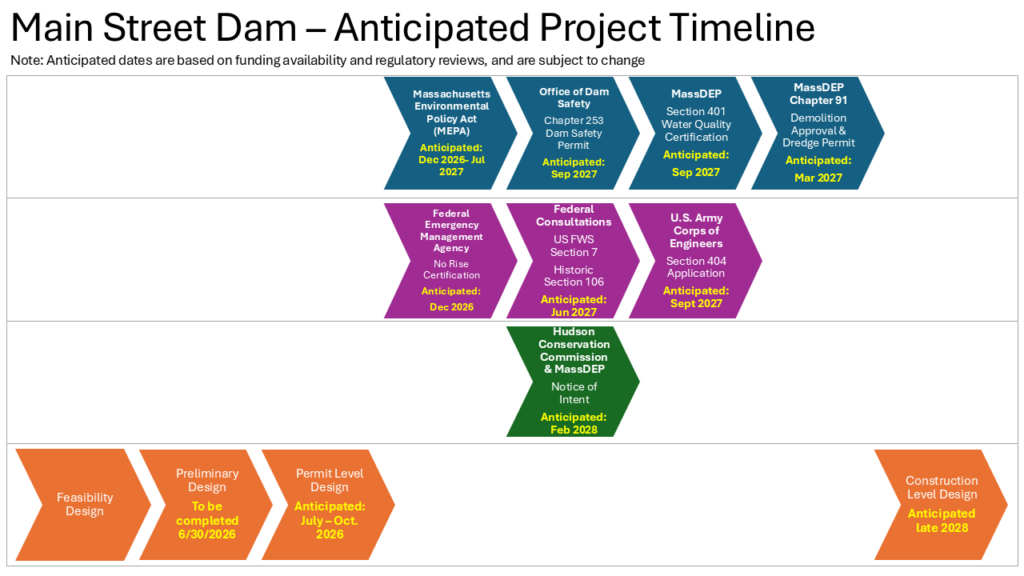
Any future work at Main Street Dam will require coordination with multiple agencies and careful review. This includes environmental permitting, engineering design and evaluation, consideration of multiple alternatives, and public engagement and input. The goal is to identify an approach that protects public safety while supporting the long-term health of the brook.
PERMITTING & COMPLIANCE
This project requires multiple state and federal permits, ensuring compliance with environmental and historic preservation laws, including:
- Wetlands Protection Act Notice of Intent (WPA NOI)
- Section 404 permit (US Army Corps of Engineers—USACE)
- MassDEP 401 Water Quality Certification
- Chapter 91 Waterways and Dam Safety permits
- MEPA and Section 106 federal historic preservation compliance (Project Notification Form to Massachusetts Historical Commision)
ALTERNATIVES CONSIDERED
No Action: Would leave the dam in disrepair, risking failure and continued environmental degradation.
Dam Repair: Would not resolve habitat fragmentation or long-term ecological concerns.
Dam Removal Alone: While eliminating safety concerns, this would not achieve full habitat restoration.
Preferred Approach: Multi-step ecological restoration for long-term river health and safety benefits.
Community Engagement & Resources
Join the Journey: Public Participation and Education
OARS is committed to keeping the public informed and engaged throughout this project. We value community input and strive to provide transparent, accessible information.
Past Meetings
FAQs
Find answers to frequently asked questions and download the FAQ page by clicking the button below.
Stay Connected
The restoration of Danforth Brook is an opportunity to engage with the history, ecology, and future of Hudson’s waterways. OARS invites the community to stay informed and get involved.
For more information or questions or to provide feedback, please get in touch with us via email at EcoRest@oars3rivers.org. We are here to assist and engage with our community every step of the way.
Project Partners
This project is made possible through partnerships with state agencies, conservation groups, local stakeholders, and funding through the Massachusetts Executive Office of Energy and Environmental Affairs Dam and Seawall Program.
 |
 |
 |
 |