Aquatic Invasive Species Identification Workshop
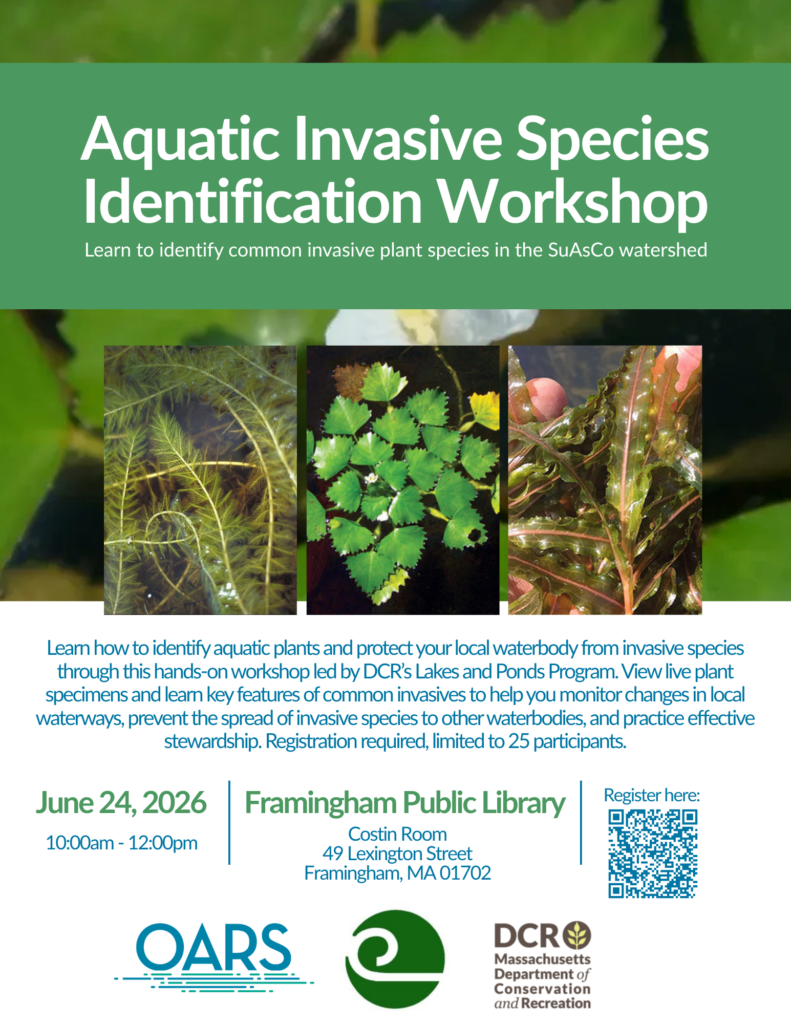
WHEN: Wednesday, June 24, 10am-12pm
WHERE: Framingham Public Library, 49 Lexington St, Framingham, MA
Learn how to identify aquatic plants and protect your local waterbody from invasive species through this hands-on workshop led by DCR’s Lakes and Ponds Program. View live plant specimens and learn key features of common invasives that can be found in the SuAsCo watershed.
By learning to detect invasive plants early, participants can help prevent new infestations from becoming established. Early detection increases the chance that invasive plants can be eradicated before they spread, saving both ecological value and costs.
Registration required, limited to 25 participants.
REGisTER FOR THE WORKSHOP HERE
Learn more by viewing the DCR Lakes & Ponds educational materials here.
Event hosted by OARS and Middlesex Conservation District, and presented by DCR Lakes & Ponds Program.
Some common invasives to be aware of:
-
Hydrilla (Hydrilla verticillata): Highly aggressive, grows an inch a day, and spreads via turions and fragmentation.
-
Eurasian Watermilfoil (Myriophyllum spicatum): Widespread, forming dense mats that choke out native vegetation.
-
Water Chestnut (Trapa natans): Forms floating, thorny rosettes that impede navigation and recreation.
-
Fanwort (Cabomba caroliniana): Common in lakes and rivers, often spreading through fragmenting.
-
Curly-leaf Pondweed (Potamogeton crispus): An early-growing invasive found in many waterbodies.
-
Purple Loosestrife (Lythrum salicaria): Frequently found on the margins of lakes and wetlands.